As Herr Krüger, 72, sits on the bench, his hands resting on his walking stick, he watches the swift walkers pass by. Every time he stands up, he needs a moment to gather his strength. Many older adults struggle with reduced mobility and stiffness, which can make simple activities like walking much more challenging.
But it doesn’t have to be this way. With the right stretching and mobility exercises, people over 60 can regain their freedom of movement and enjoy an active, independent lifestyle. In this article, we’ll explore five effective stretching routines that can dramatically improve one’s ability to walk comfortably and confidently.
Understand the Importance of Stretching for Older Adults
As we age, our muscles and joints naturally become stiffer and less flexible. This can lead to a host of problems, including decreased balance, reduced range of motion, and increased risk of falls and injuries. Regular stretching helps counteract these age-related changes, keeping the body limber and well-equipped for everyday activities.
But the benefits of stretching go beyond just physical improvements. Improved mobility also supports mental well-being, allowing older adults to maintain their independence and participate in the hobbies and social activities they enjoy. When walking becomes easier, it opens up a world of possibilities.
- ➡Diese einfache Hüftübung hilft Menschen über 70, ihre Schritte stabiler zu machen
- ➡Warum schwere Beine am Abend oft mehr als nur Müdigkeit bedeuten und welche sanften Übungen Experten dann empfehlen
- ➡Diese Symptome im Becken- und Hüftbereich, die Sporttherapeuten oft bei Menschen mit Bewegungsmangel sehen, und passende Übungen dafür
- ➡Warum Judo laut Experten nicht nur körperliche Stärke, sondern auch Balance und mentale Disziplin fördert
The key is to find a stretching routine that targets the specific muscle groups and joints that tend to tighten up with age. With a little time and dedication, older adults can regain their youthful suppleness and reclaim their active lifestyles.
The Five Essential Stretches for Better Mobility
Incorporating these five stretches into your daily routine can make a significant difference in your ability to walk with ease and confidence:
1. Calf Stretch
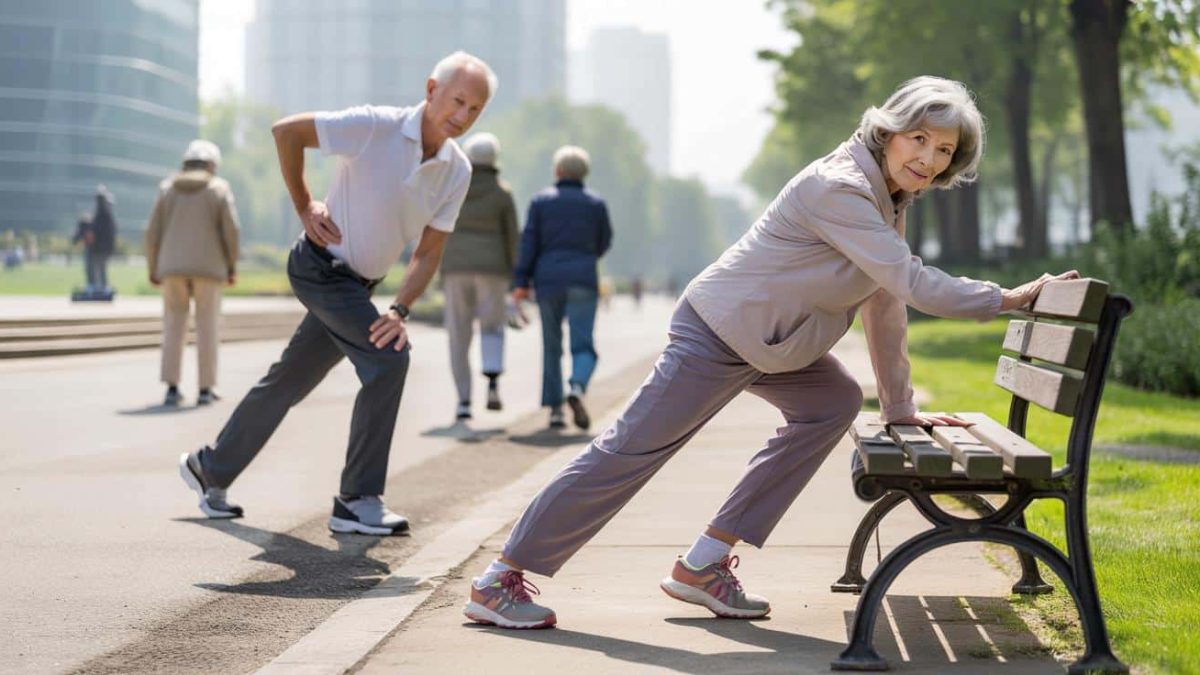
Tight calf muscles can contribute to foot and ankle problems, making it difficult to walk smoothly. Stand facing a wall, place your hands on the wall at shoulder height, and step back with one leg. Keeping the heel of the back leg on the ground, gently lean forward until you feel a stretch in the calf. Hold for 30 seconds, then switch legs.
This stretch targets the gastrocnemius and soleus muscles, which are crucial for powering your steps. Regular calf stretching can improve ankle flexibility and stability, reducing the risk of trips and falls.
- ➡Diese Symptome an Rücken, Knie und Schultern zeigen oft denselben Ursprung: zu wenig Bewegung im Alltag – so raten Experten dagegen vorzugehen
- ➡Diese Symptome an Rücken, Knie und Schultern zeigen oft denselben Ursprung: zu wenig Bewegung im Alltag – so raten Experten dagegen vorzugehen
- ➡This Short Training Routine Helps People Over 70 Maintain Mobility in Everyday Life
- ➡Wenn sich dein Körper im Alltag zunehmend unbeweglich anfühlt, erkennen Physiotherapeuten darin oft mehr, als du denkst
Tip: For an even deeper stretch, bend the knee of the back leg slightly.
2. Hamstring Stretch
Tight hamstrings can limit hip and knee mobility, making it harder to walk with a full range of motion. Sit on the floor with one leg extended. Reach forward and gently try to touch your toes, keeping your back straight. Hold for 30 seconds, then switch legs.
This stretch works the large muscle group at the back of the thigh, which plays a crucial role in knee and hip function. Improving hamstring flexibility can enhance stride length and ease of movement.
Tip: If you have trouble reaching your toes, loop a towel or strap around the thigh to assist the stretch.
- ➡Diese Warnzeichen an Knie und Beinen können darauf hinweisen, dass Ihr Körper mehr Bewegung braucht – so gehen Physiotherapeuten meist dagegen vor
- ➡Diese Anzeichen deuten darauf hin, dass deine Bauch- und Rumpfmuskeln unterfordert sind – mit Übungen, die Sporttherapeuten empfehlen
- ➡Drei Übungen gegen Gleichgewichtsverlust, die Sportwissenschaftler Menschen über 65 empfehlen
- ➡Warum langsames Joggen in kurzen Intervallen auch für fitte Menschen über 65 möglich sein kann
3. Hip Flexor Stretch
The hip flexors, located at the front of the hip, can become tight from prolonged sitting. This can restrict the range of motion in the hips and make it challenging to lift the leg during walking. To stretch the hip flexors, take a large step forward with one leg, keeping the back knee on the ground. Gently lean your hips forward until you feel a stretch in the front of the hip. Hold for 30 seconds, then switch legs.
Improving hip flexibility through this stretch can enhance the ability to lift the leg during the walking gait, making each step smoother and more efficient.
Tip: For an added challenge, raise the arms overhead during the stretch.
4. Quadriceps Stretch
The quadriceps, or the muscles at the front of the thigh, are crucial for knee and leg function. Tight quads can limit knee flexibility and make it harder to bend the leg during walking. To stretch the quads, stand near a wall or chair for balance, then grasp your ankle and gently pull your heel toward your buttock. Hold for 30 seconds, then switch legs.
- ➡Warum langsames Joggen in kurzen Intervallen auch für fitte Menschen über 65 möglich sein kann
- ➡Warum Gleichgewichtsprobleme im Alltag ein frühes Zeichen für zu wenig Bewegung sein können und welche Übungen Experten dann priorisieren
- ➡Diese unauffälligen Symptome zeigen, dass Ihr Körper mehr Rotation und Mobilität braucht – was Physiotherapeuten konkret empfehlen
- ➡Warum Volleyball ein unterschätztes Training für Reaktionsfähigkeit, Sprungkraft und Schulterbeweglichkeit sein kann
This stretch helps maintain the range of motion in the knee joint, allowing for a more natural and fluid walking pattern.
Tip: For a deeper stretch, try to keep your knees close together.
5. Ankle Mobility Drill
Stiff ankles can limit the foot’s ability to flex and extend during the walking gait, leading to a rigid, shuffling step. To improve ankle mobility, stand facing a wall and place your hands on the wall at shoulder height. Keeping your heels on the ground, bend your knees and push your hips back, allowing your chest to move closer to the wall. Hold for 30 seconds, then repeat.
This dynamic stretch not only targets the ankle joint but also engages the calf muscles, promoting overall lower leg flexibility and range of motion.
- ➡Diese Warnzeichen zeigen, wenn Ihrem Körper Bewegung fehlt und warum Physiotherapeuten sofort reagieren würden
- ➡Wenn Rücken, Beine und Schultern gleichzeitig unbeweglich sind, ist das oft kein Zufall – diese Übungen empfehlen Physiotherapeuten besonders häufig
- ➡Warum regelmäßiges Wandern ab 70 Jahren laut Studien das Herz-Kreislauf-System stabilisiert
- ➡Warum regelmäßiges Wandern nach 70 laut Studien das Herz-Kreislauf-System stabil hält
Tip: For an added challenge, try lifting your heels off the ground during the stretch.
| Stretch | Primary Muscle Group | Benefits for Walking |
|---|---|---|
| Calf Stretch | Gastrocnemius, Soleus | Improved ankle flexibility and stability |
| Hamstring Stretch | Hamstrings | Enhanced hip and knee mobility, increased stride length |
| Hip Flexor Stretch | Hip Flexors | Improved ability to lift the leg during walking |
| Quadriceps Stretch | Quadriceps | Increased knee flexibility and range of motion |
| Ankle Mobility Drill | Ankles, Calves | Enhanced foot and ankle flexibility for a more fluid gait |
“Maintaining flexibility is crucial for older adults, as it allows them to continue participating in the activities they enjoy and maintain their independence. These stretching exercises target the key muscle groups and joints that tend to tighten up with age, helping to restore mobility and reduce the risk of falls and injuries.”
– Dr. Sarah Bender, Physical Therapist
Consistency is key when it comes to improving mobility through stretching. Aim to incorporate these five exercises into your daily routine, even if it’s just for a few minutes at a time. With regular practice, you’ll start to notice a significant difference in your ability to walk with ease and confidence.
- ➡Warum Langlauf laut Sportmedizinern eines der vollständigsten Trainings für Herz, Muskeln und Ausdauer sein kann
- ➡Warum Schmerzen im Alltag oft nicht mit dem Alter, sondern mit Bewegungsmangel zusammenhängen – und Übungen, die Experten wirklich empfehlen
- ➡Why Step Aerobics is Considered an Intensive Workout for Legs, Endurance, and Coordination According to Experts
- ➡Warum Slackline laut Trainern eine der effektivsten Übungen für Gleichgewicht, Fokus und Stabilität ist
“The beauty of these stretches is that they can be done anywhere, at any time. Whether you’re taking a break from your desk or relaxing in the evening, these exercises can easily fit into your schedule and become a natural part of your daily routine.”
– Emma Hartmann, Mobility Coach
Remember, the journey to improved mobility is a gradual one, so be patient and persistent. With time and dedication, you can reclaim your active lifestyle and enjoy the freedom of walking without limitations.
Frequently Asked Questions
How often should I do these stretches?
Aim to incorporate these stretches into your daily routine, even if it’s just for a few minutes at a time. Consistency is key for improving and maintaining flexibility.
- ➡Warum Badminton Reflexe, Reaktionsfähigkeit und das Herz-Kreislauf-System gleichzeitig trainiert – laut Sportwissenschaftlern
- ➡Warum Taekwondo eine starke Kombination aus Beweglichkeit, Schnelligkeit und Gleichgewicht bietet, laut Sportwissenschaftlern
- ➡Warum moderates Radfahren nach 70 der ideale Sport für Herz und Knie ist
- ➡Wenn du dich oft “zusammengesackt” fühlst, kann das ein Zeichen von Bewegungsmangel und fehlender Muskelaktivität sein
Can I do these stretches if I have joint pain or arthritis?
Yes, these stretches can be beneficial for individuals with joint pain or arthritis, but it’s important to listen to your body and modify the exercises as needed. If you experience any sharp or worsening pain, stop the stretch and consult with a healthcare professional.
How long should I hold each stretch?
Hold each stretch for 30 seconds, then switch sides. This duration allows the muscles to effectively lengthen and improve flexibility.
Can I do these stretches before or after walking?
Both! Doing these stretches before a walk can help warm up the muscles and prepare the body for physical activity. Afterwards, they can help cool down and promote recovery.
Are there any other exercises I can do to improve my mobility?
In addition to these stretches, incorporating strength training exercises that target the leg and core muscles can also help improve mobility and balance. Consulting with a physical therapist or personal trainer can help create a well-rounded exercise program.
- ➡Drei Übungen zur Verbesserung der Gehgeschwindigkeit für Menschen über 65 Jahre
- ➡Wie Reiten Ihre Rumpfstabilität, Balance und Körperhaltung verbessern kann
- ➡Warum langes Sitzen deinen Körper mehr verändert, als viele denken, und welche Ausgleichsübungen Physiotherapeuten konkret empfehlen
- ➡Wie langes Sitzen deinen Körper wirklich verändert und die besten Ausgleichsübungen laut Physiotherapeuten
How long will it take to see improvements in my walking ability?
Everyone’s body responds differently, but most people start to notice improvements in their mobility and walking within 2-4 weeks of consistently performing these stretches. Be patient and keep up the routine, and you’ll gradually regain your freedom of movement.
Can I do these stretches if I have a history of injuries or surgeries?
If you have any pre-existing injuries or have undergone surgery, it’s important to consult with a healthcare professional before starting a new stretching routine. They can help you modify the exercises to suit your individual needs and ensure a safe and effective program.
Are there any additional tips for making the most of these stretches?
Be sure to listen to your body and stop if you experience any sharp or worsening pain. Gradually increase the intensity and duration of the stretches over time. And don’t forget to stay hydrated and incorporate rest days into your routine.